
An end mark is punctuation that comes at the end of a sentence to let you know when the sentence ends. Punctuation supports reading by helping readers know when the writer has fully expressed an idea or point.
The full stop (Commonwealth English), period (North American English) or full point . is a punctuation mark. It is used for several purposes, most often to mark the end of a declarative sentence (as opposed to a question or exclamation); this sentence-terminal use, alone, defines the strictest sense of full stop.
Example: Marie doesn’t know the situation.
The period is also used as more than just an end mark. It is used in abbreviations, too:
Example: 1907 Osayi Williams Rd. , A. B. Chester, Mrs. Holloway, Dr. Watson
The question mark ? (also known as interrogation point, query, or eroteme in journalism) is a punctuation mark that indicates an interrogative clause or phrase in many languages. The question mark is not used for indirect questions. The question mark glyph is also often used in place of missing or unknown data.
Example: Did you see the birds with grey feathers?
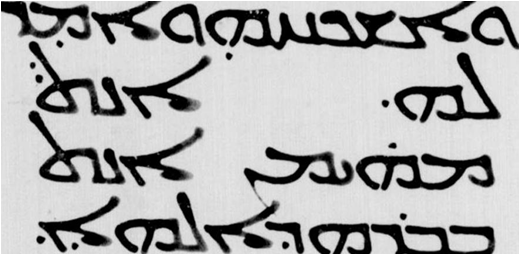
According to a 2011 discovery by Chip Coakley, a Cambridge University manuscript expert, Syriac was the first language to use a punctuation mark to indicate an interrogative sentence. The Syriac question mark, known as the zagwa elaya (“upper pair”) has the form of a vertical double dot over a word.
The rhetorical question mark or percontation point was invented by Henry Denham in the 1580s and was used at the end of a rhetorical question; however, it became obsolete (its use died out) in the 17th century. It was the reverse of an ordinary question mark, so that instead of the main opening pointing back into the sentence, it opened away from it.
A rhetorical question is one for which the questioner does not expect a direct answer: in many cases it may be intended to start a discourse, or as a means of displaying or emphasize the speaker’s or author’s opinion on a topic.
A common example is the question “Am I talking to the queen?” This question, when posed, is intended not to ask about the listener’s ability but rather to insinuate the listener’s lack of ability.
A rhetorical question may be intended as a challenge. The question is often difficult or impossible to answer. In the example, What have the Romans ever done for us? (Monty Python’s Life of Brian) the question functions as a negative assertion.
It is intended to mean The Romans have never done anything for us!. When Shakespeare’s Mark Antony exclaims: Here was a Caesar! when comes such another? it functions as an assertion that Caesar possesses such rare qualities they may never be seen again. (Julius Caesar, Act 3, scene 2, 257)
The comma is used to separate a list.
Example: My favorite animals are giraffes, dogs, cats, and birds.
It is also used between the date and the year.
Example: Today is November 6, 2023, and I plan to enjoy myself..
The exclamation mark, !, also sometimes referred to as the exclamation point, especially in American English, is a punctuation mark usually used after an interjection or exclamation to indicate strong feelings or high volume (shouting), or to show emphasis. The exclamation mark often marks the end of a sentence, for example: “Attention!” Similarly, a bare exclamation mark (with nothing before or after) is often established in warning signs.
A sentence ending in an exclamation mark may represent an exclamation or an interjection (such as “Woo!”, “Stonks!”), or an imperative (“Freeze!”), or may indicate astonishment or surprise: “These are the footprints of a enormous goose!” Exclamation marks are occasionally placed mid-sentence with a function similar to a comma, for dramatic effect, although this usage is obsolete: “On the board, oh! there was a such a bad poem.”
Informally, exclamation marks may be repeated for additional emphasis (“That’s hillarious!!!”), but this practice is generally considered unacceptable in formal prose.
The exclamation mark is sometimes used in conjunction with the question mark. This can be in protest or astonishment (“Out of all places, did you build the school in the middle of no where?!”); a few writers replace this with a single, nonstandard punctuation mark, the interrobang, which is the combination of a question mark and an exclamation mark.
The colon is made with two periods. It is used for time, and it comes before a list.
Example: 7:07 pm /I will need the following items from the store: bacon, mineral water, crispies and peanut butter.
The semi-colon is made with a period over a comma. It is a punctuation mark (;) used to separate parts of a sentence or list and indicating a pause longer than a comma, but shorter than a period. In a sentence, a transition word may follow the semi-colon.
Example: Cappuccino is strong; however, it is no match for the heroic energy of the cookie choco latte.
A dash is a punctuation mark that writers use to denote a sudden break or shift in thought. (One dash = Two hyphens)
Use the dash:
- (1) to indicate a break or shift in thought: For example: Example: Do we — can we–dare we ask for permission for this weekend?
- (2) to introduce a word or group of words which you wish to emphasize. Example: What he nated most once he loves most is– Brighton Hove-Albion.
- 3) to set off strongly distinguished parenthetical material. Example: I think–no, I am positive — you should go.
- 4) to indicate omission of letters and words Example: Detective Chief S– was my school-mate.
The hyphen is used to separate (join) the parts of compound words: Examples: fast-moving; sister-in-law; half-asleep; X-ray; know-it-all; forty-six; three-fourths and to indicate the division of a word broken at the end of a line. Examples: know-ledge, ste-no-gra-pher
- Never divide a monosyllable: Example: strength, laughed
- Do not divide a syllable with a silent vowel: Example: climbed, yelled
- Do not divide a word with only 4 letters: Example: also, only, opal
- Divide two consonants standing between vowels: Example: struc-ture, alter-native, exis-ten-tialism
- Do not divide sums of money.
- Do not divide initials in a name or in proper names.
- Do not divide units of time.
Use quoation marks in these situations
To enclose every direct quotation and each part of an interrupted quotation: Example: “What will my starting salary be?” I asked the president. “Well,” he replied, “You will decide that.”
In a dialogue. Use a separate paragraph for each change of speaker. Example:
“Dad,” cried Mauro.
“There, there, nothing will be the same ever again after Szymanski,” his dad said.
To enclose words with a widely different level of usage. Example: The person who has “had it” so far is his mother.
To enclose chapter headings and the titles of articles. Example: Jayden’s famed painting, “The header from the moon,” was recently reproduced in European Art Conference Journal.
Single quotation marks (‘) are used to enclose a quotation within a quotation. Example: The boss said, ”when you say, ‘I’ll be there on time,’ I expect you to mean what you say.”
The apostrophe ‘ is used in the following situations:
1)To form a possessive. EX: Ralf’s mother’s brother
2)To indicate a contraction. EX: It’s, which translates to It is.
3)To indicate omission of a letter from words or a figure from numerals. EX: Yes, ma’am.
4)To indicate the plurals of letters, numerals, symbols, abbreviations.
EX: Only A’s, B’s and C’s are considered successful grades in Çemişgezek Atomic Research Center.
5) And s to form the possessive case of a noun not ending in s:
Example: Children’s; town’s
6) To form the possessive case of a plural noun ending in s:
Example: Boys’ and ladies’ classrooms
7) Alone or with s to form the possessive of nouns ending is s:
Example: Robert Burns’ or Burns’s (rule: words of one syllable)
8)and s in the last element of compound nouns:
Example : My son-in-law’s debts; King Alfred IV’s funeral; somebody else’s lover
9) To show that letters of figures have been omitted:
Example: Aren’t; shouldn’t; the civil war was fought 1861-’65.
10) And s to indicate the plurals of numerals, letters, etc. Ex: Uncrossed t’s look like 1’s. He uses too many and’s and but’s in speaking.
Parenthesis is one of a pair of shallow, curved signs (, ) used to enclose an additional inserted word or comment and distinguish it from the sentence in which it is found.
Bracket is one of a pair of symbols, often [ ], used in keying or printing to indicate the insertion of special commentary, such as that made by an editor or as an alternative to parentheses.

 The Lectures