Romanticism (1798–1837)
The Romantic period was one of major social change in England and Wales, because of the depopulation of the countryside and the rapid development of overcrowded industrial cities, that took place in the period roughly between 1750 and 1850. The movement of so many people in England was the result of two forces: the Agricultural Revolution, that involved the Enclosure of the land, drove workers off the land, and the Industrial Revolution which provided them employment.
Romanticism may be seen in part as a reaction to the Industrial Revolution, though it was also a revolt against aristocratic social and political norms of the Age of Enlightenment, as well a reaction against the scientific rationalization of nature. The French Revolution was an especially important influence on the political thinking of many of the Romantic poets.
Romanticism was characterized by its emphasis on emotion and individualism as well as glorification of all the past and nature, preferring the medieval rather than the classical. It was partly a reaction to the Industrial Revolution, the aristocratic social and political norms of the Age of Enlightenment, and the scientific rationalization of nature—all components of modernity
Robert Burns (1759–1796) was a pioneer of the Romantic movement, and after his death he became a cultural icon in Scotland. The poet, painter, and printmaker William Blake (1757–1827) was another of the early Romantic poets. Among his most important works are Songs of Innocence (1789) and Songs of Experience (1794) “and profound and difficult ‘prophecies’ “, such as “Jerusalem: the Emanation of the Giant Albion” (1804–c.1820).
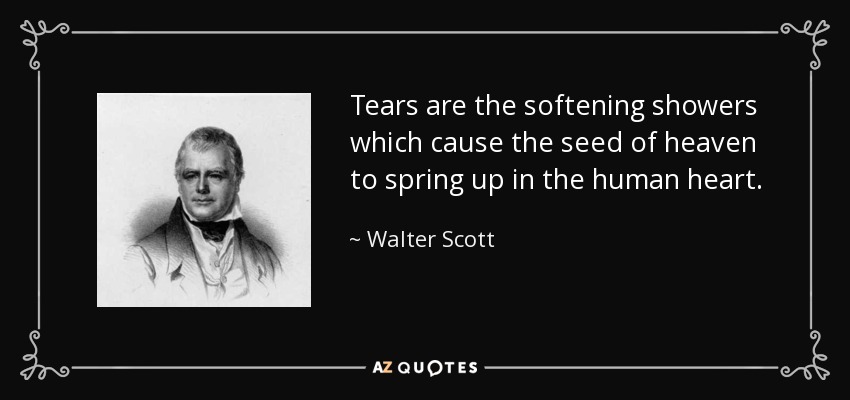
After Blake, among the earliest Romantics were the Lake Poets, including William Wordsworth (1770–1850), Samuel Taylor Coleridge (1772–1834), Robert Southey (1774–1843) and journalist Thomas de Quincey (1785–1859). However, at the time Walter Scott (1771–1832) was the most famous poet.
The second generation of Romantic poets includes Lord Byron (1788–1824), Percy Bysshe Shelley (1792–1822), Felicia Hemans (1793-1835) and John Keats (1795–1821). Shelley is perhaps best known for Ode to the West Wind, To a Skylark, and Adonaïs, an elegy written on the death of Keats. His close circle of admirers included the most progressive thinkers of the day.
One of the most popular novelists of the era was Sir Walter Scott, whose historical romances inspired a generation of painters, composers, and writers throughout Europe. Scott’s novel-writing career was launched in 1814 with Waverley, often called the first historical novel.
Jane Austen’s works critique the novels of sensibility of the second half of the 18th century and are part of the transition to 19th-century realism. Her plots, in novels such as Pride and Prejudice (1813), Emma (1815), though fundamentally comic, highlight the dependence of women on marriage to secure social standing and economic security.
Mary Shelley (1797–1851) is remembered as the author of Frankenstein (1818).
Victorian Literature (1837–1901)
It was in the Victorian era (1837–1901) that the novel became the leading literary genre in English. Women played an important part in this rising popularity both as authors and as readers, and monthly serialising of fiction also encouraged this surge in popularity, further upheavals which followed the Reform Act of 1832″.
This was in many ways a reaction to rapid industrialization, and the social, political, and economic issues associated with it, and was a means of commenting on abuses of government and industry and the suffering of the poor, who were not profiting from England’s economic prosperity. Significant early examples of this genre include Sybil, or The Two Nations (1845) by Benjamin Disraeli, and Charles Kingsley’s Alton Locke (1849).
Charles Dickens (1812–1870) emerged on the literary scene in the late 1830s and soon became probably the most famous novelist in the history of English literature. Dickens fiercely satirised various aspects of society, including the workhouse in Oliver Twist, and the failures of the legal system in Bleak House. An early rival to Dickens was William Makepeace Thackeray (1811–1863), who during the Victorian period ranked second only to him, but he is now known almost exclusively for Vanity Fair (1847).
The Brontë sisters, Emily, Charlotte and Anne, were other significant novelists in the 1840s and 1850s.Jane Eyre (1847), Charlotte Brontë’s most famous work, was the first of the sisters’ novels to achieve success. Emily Brontë’s (1818–1848) novel was Wuthering Heights and, according to Juliet Gardiner, “the vivid sexual passion and power of its language and imagery impressed, bewildered and appalled reviewers,» and led the Victorian public and many early reviewers to think that it had been written by a man. The Tenant of Wildfell Hall (1848) by Anne Brontë is now considered to be one of the first feminist novels.
Although pre-dated by John Ruskin’s The King of the Golden River in 1841, the history of the modern fantasy genre is generally said to begin with George MacDonald, the influential author of The Princess and the Goblin and Phantastes (1858). Wilkie Collins’ epistolary novel The Moonstone (1868), is generally considered the first detective novel in the English language.
Robert Louis Stevenson (1850–1894) was an important Scottish writer at the end of the nineteenth century, author of Strange Case of Dr Jekyll and Mr Hyde (1886), and the historical novel Kidnapped (1886). H.G. Wells’s (1866–1946) writing career began in the 1890s with science fiction novels like The Time Machine (1895), and The War of the Worlds (1898) which describes an invasion of late Victorian England by Martians, and Wells is seen, along with Frenchman Jules Verne (1828–1905), as a major figure in the development of the science fiction genre.
The romantic American novel developed fully with Nathaniel Hawthorne’s (1804–1864) The Scarlet Letter (1850), a stark drama of a woman cast out of her community for committing adultery. Hawthorne’s fiction had a profound impact on his friend Herman Melville (1819–1891). In Moby-Dick (1851), an adventurous whaling voyage becomes the vehicle for examining such themes as obsession, the nature of evil, and human struggle against the elements.
Mark Twain (the pen name used by Samuel Langhorne Clemens, 1835–1910) was the first major American writer to be born away from the East Coast—in the border state of Missouri. His regional masterpieces were the novels Adventures of Tom Sawyer (1876) and Adventures of Huckleberry Finn (1884). Twain’s style changed the way Americans write their language. His characters speak like real people and sound distinctively American, using local dialects, newly invented words, and regional accents.
Literature for children developed as a separate genre. Some works become internationally known, such as those of Lewis Carroll, Alice’s Adventures in Wonderland (1865) and its sequel Through the Looking-Glass. Robert Louis Stevenson’s (1850–1894) Treasure Island (1883), is the classic pirate adventure.
The leading poets during the Victorian period were Alfred, Lord Tennyson (1809–1892), Robert Browning (1812–1889), Elizabeth Barrett Browning (1806–61), and Matthew Arnold (1822–1888). The poetry of this period was heavily influenced by the Romantics, but also went off in its own directions.
Modernism (1901–1939)
English literary modernism developed in the early twentieth-century out of a general sense of disillusionment with Victorian era attitudes of certainty, conservatism, and belief in the idea of objective truth. The movement was influenced by the ideas of Charles Darwin (1809–1882), Ernst Mach (1838–1916), Henri Bergson (1859–1941), Friedrich Nietzsche (1844–1900), James G. Frazer (1854–1941), Karl Marx (1818–1883) (Das Kapital, 1867), and the psychoanalytic theories of Sigmund Freud (1856–1939), among others.
In the 1880s, increased attention was given to the idea that it was necessary to push aside previous norms entirely, instead of merely revising past knowledge in light of contemporary techniques. The theories of Sigmund Freud (1856–1939), and Ernst Mach (1838–1916) influenced early Modernist literature.
While Charles Darwin’s work remade the Aristotelian concept of “man, the animal” in the public mind, Jung suggested that human impulses toward breaking social norms were not the product of childishness or ignorance, but rather derived from the essential nature of the human animal.
Another major precursor of modernism was Friedrich Nietzsche, especially his idea that psychological drives, specifically the “will to power”, were more important than facts, or things. Henri Bergson (1859–1941), on the other hand, emphasized the difference between scientific clock time and the direct, subjective, human experience of time.
His work on time and consciousness “had a great influence on twentieth-century novelists,” especially those modernists who used the stream of consciousness technique, such as Dorothy Richardson for the book Pointed Roofs (1915), James Joyce for Ulysses (1922) and Virginia Woolf (1882–1941) for Mrs Dalloway (1925) and To the Lighthouse (1927).
Important literary precursors of modernism were Fyodor Dostoyevsky (1821–81) (Crime and Punishment (1866), The Brothers Karamazov (1880)); Walt Whitman (1819–92) (Leaves of Grass) (1855–91); Charles Baudelaire (1821–67) (Les Fleurs du mal), Rimbaud (1854–91) (Illuminations, 1874); Knut Hamsun (1859-1952) (Hunger, 1890); August Strindberg (1849–1912), especially his later plays, including the trilogy To Damascus 1898–1901, A Dream Play (1902), The Ghost Sonata (1907).
Aldous Huxley (1894–1963) published his famous dystopia Brave New World in 1932, the same year as John Cowper Powys’s A Glastonbury Romance. Samuel Beckett (1906–1989) published his first major work, the novel Murphy in 1938. This same year Graham Greene’s (1904–1991) first major novel Brighton Rock was published. Then in 1939 James Joyce’s published Finnegans Wake, in which he creates a special language to express the consciousness of a dreaming character.
Post–modernism (1940–2000)
Postmodern literature is a form of literature that is characterized by the use of metafiction, unreliable narration, self-reflexivity, intertextuality, and which often thematizes both historical and political issues.
In 1947 Malcolm Lowry published Under the Volcano, while George Orwell’s satire of totalitarianism, Nineteen Eighty-Four, was published in 1949. Other novelists writing in the 1950s and later were: Anthony Powell whose twelve-volume cycle of novels A Dance to the Music of Time, is a comic examination of movements and manners, power and passivity in English political, cultural and military life in the mid-20th century; Nobel Prize laureate William Golding’s allegorical novel Lord of the Flies 1954, explores how culture created by man fails, using as an example a group of British schoolboys marooned on a deserted island.
Scottish writer Muriel Spark pushed the boundaries of realism in her novels. The Prime of Miss Jean Brodie (1961), at times takes the reader briefly into the distant future, to see the various fates that befall its characters. Anthony Burgess is especially remembered for his dystopian novel A Clockwork Orange (1962), set in the not-too-distant future. During the 1960s and 1970s, Paul Scott wrote his monumental series on the last decade of British rule in India, The Raj Quartet (1966–1975).
Scotland has in the late 20th century produced several important novelists, including the writer of How Late it Was, How Late, James Kelman, who like Samuel Beckett can create humour out of the most grim situations and Alasdair Gray whose Lanark: A Life in Four Books (1981) is a dystopian fantasy set in a surreal version of Glasgow called Unthank.
Genre fiction in the twentieth-century
Many works published in the twentieth-century were examples of genre fiction. This designation includes the crime novels, spy novel, historical romance, fantasy, graphic novel, and science fiction.
Agatha Christie (1890–1976) was an important crime writer of novels, short stories and plays, who is best remembered for her 80 detective novels as well as her successful plays for the West End theatre. Another popular writer during the Golden Age of detective fiction was Dorothy L. Sayers (1893–1957). Other recent noteworthy writers in this genre are Ruth Rendell, P.D. James and Scot Ian Rankin. Erskine Childers’ The Riddle of the Sands (1903), is an early example of spy fiction. Another noted writer in the spy novel genre was John le Carré, while in thriller writing, Ian Fleming created the character James Bond 007.
Among significant writers in the fantasy genre were J.R.R. Tolkien, author of The Hobbit and The Lord of the Rings. C.S. Lewis author of The Chronicles of Narnia, and J.K. Rowling who wrote the highly successful Harry Potter series. Lloyd Alexander winner of the Newbery Honor as well as the Newbery Medal for his The Chronicles of Prydain pentalogy is another significant author of fantasy novels for younger readers.
Like fantasy in the later decades of the 20th century, the genre of science fiction began to be taken more seriously, and this was because of the work of writers such as Arthur C. Clarke’s (2001: A Space Odyssey), and Michael Moorcock. Another prominent writer in this genre, Douglas Adams, is particularly associated with the comic science fiction work, The Hitchhiker’s Guide to the Galaxy.
Main Source: Wikipedia

 The Lectures